

How hospitals reduce agency and casual staffing spend
Agency and casual pool spend is the gap between the funded establishment and what the wards actually need. Cheaper shift-filling helps at the margin. The bulk of the saving comes from needing fewer unplanned shifts in the first place.

In brief
Fix the establishment, then fill the shifts
Agency and casual pool spend is the gap between the funded establishment and what the wards actually need.
Hospitals close it by fixing the establishment first: modelling leave relief properly, converting sustained agency hours into substantive FTE, building a casual pool deliberately and rostering to demand. Cheaper shift-filling helps at the margin.
The bulk of the saving comes from needing fewer unplanned shifts in the first place. That is workforce planning work, done upstream of the roster.
Why it keeps coming back
Agency is solved by recruiting to a plan
Most establishments are last year’s budget plus a percentage. They are not built from the roster the ward actually runs. The difference shows up as vacancies, then as casual pool requests, then as agency. Finance sees a premium labour line that will not move. Unit managers see wards that cannot be staffed from the roster. Both are describing the same gap from different sides.
Australian health services tend to carry a casual pool that is under-managed rather than over-used, with ratios and penalties set by enterprise agreement. The levers below work in that setting, and the order matters: get the establishment right, recruit to it, then run the pool so agency is the exception.
The seven levers
In order of impact
- 1
Rebuild the establishment from rostered practice
Cost each ward’s roster as it actually runs: skill mix, ratio compliance, penalties. Compare it to the funded FTE. Where the two differ, agency is paying the difference at a premium. This is the baseline every other lever is measured against.
- 2
Provision leave relief at the real rate
Annual, personal, parental, study and long service leave are predictable. Most establishments carry a leave relief factor well below what the ward consumes. The shortfall is rostered as vacancy and filled at agency rates. Correcting the factor is the single largest predictable reduction available.
- 3
Convert agency hours into substantive FTE
Show finance the fully loaded comparison, ward by ward: agency hourly rate against EBA rate with on-costs. Agency hours above a threshold are almost always cheaper as a permanent position. The business case usually funds the recruitment.
- 4
Build the casual pool on purpose
Size it to the modelled leave relief gap, not to whoever applies. Skill it for the wards that request most. Give it central coordination and visibility of every open shift. A pool that fills 85% of requests makes agency the exception.
- 5
Roster to demand, not to the template
Match shift patterns to activity by hour and day. Over-rostering quiet periods wastes substantive hours that then have to be bought back at a premium on busy ones.
- 6
Govern the escalation
Who can release a shift to agency, at what rate, with what evidence the pool was exhausted. Visibility alone changes behaviour; most services find a share of agency use that was never necessary.
- 7
Hold on to the people you have
Every resignation becomes months of backfill. Turnover is the quietest agency multiplier and the one the establishment review usually exposes.
What this looks like in practice
Mercy Health
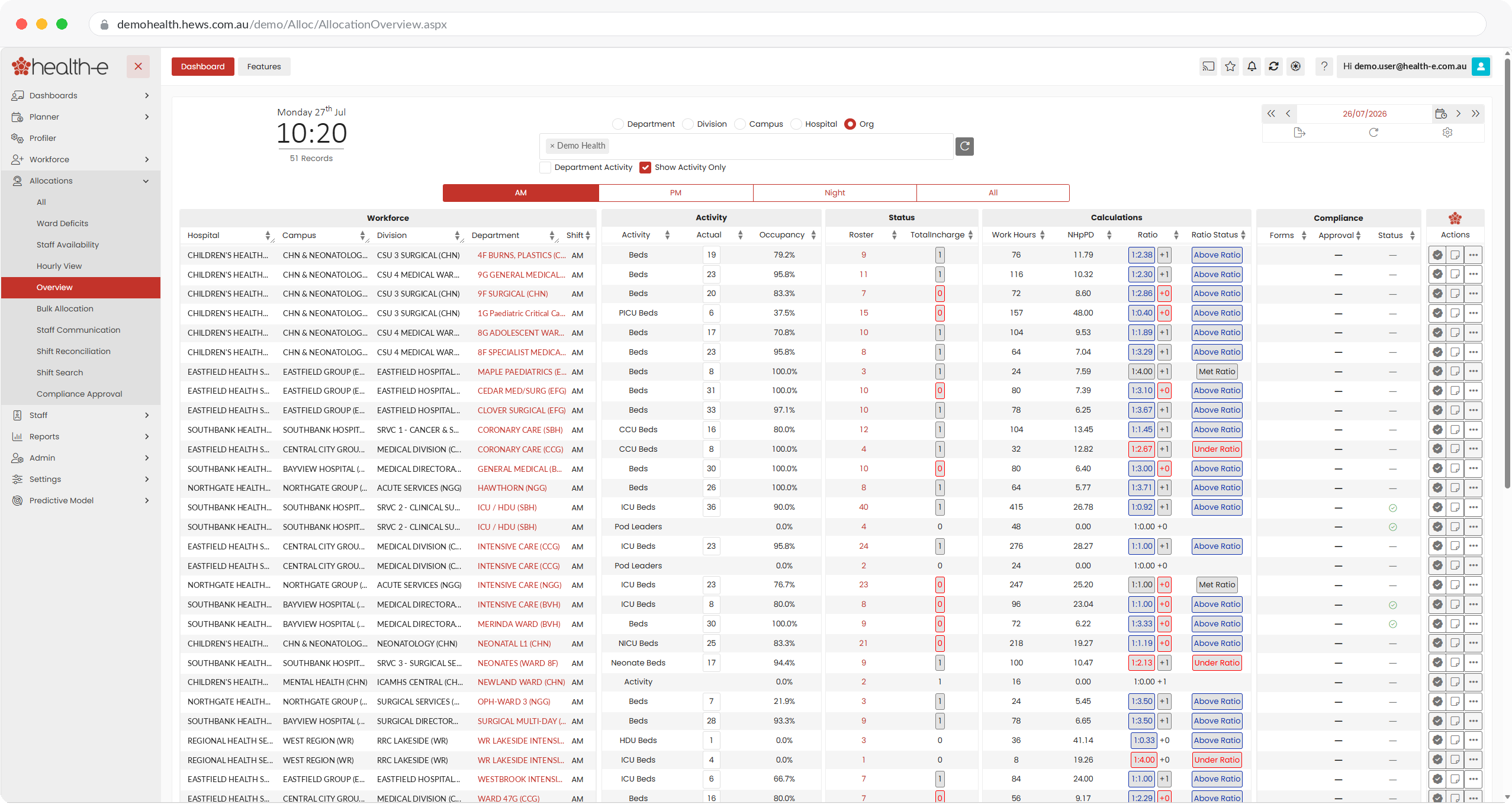
Mercy Health runs every supplementary shift through Health-e Allocations and has cut agency by two-thirds as its own bank and pool took over the work. Read the Mercy Health case study.
Where Health-e fits
Upstream of the roster
The Diagnostic prices the gap between funded and rostered establishment for every ward in weeks, from the payroll and rostering data you already hold. Modelling sets the leave relief factor and tests the FTE conversion case before it goes to the executive. Allocations runs the casual pool so agency is the last call, not the first.
The rostering system still builds the roster. Health-e decides what the roster should be allowed to cost. For how the two jobs divide, see rostering system vs workforce planning.
Frequently asked questions
Questions hospital leaders ask about agency spend
What is the difference between agency, casual pool and nurse bank?
Agency staff are supplied by a third party at a premium hourly rate plus margin. A casual pool, or bank, is the health service’s own casual workforce, paid at the EBA casual rate with no agency margin. Agency is the most expensive way to fill a shift; the casual pool is a cheaper option.
Why does agency spend keep rising even after recruitment?
Because the establishment itself is under-provisioned, usually for leave relief. New recruits fill vacancies, but the leave they and everyone else take is still rostered as a gap. Until the leave relief factor matches what the ward consumes, the gap reappears every roster period.
How much can a hospital realistically save?
It depends on the gap between funded and rostered establishment, which is why the baseline comes first. Services that correct leave relief and convert sustained agency hours to substantive FTE typically remove the bulk of recurring agency use and keep it for genuine peaks.
Does a rostering system reduce agency spend?
It makes filling shifts faster and more visible, which helps at the margin. It does not set the establishment, the leave relief factor or the budget, so it cannot remove the structural gap that generates the shifts. That is workforce planning work, done upstream of the roster.
Find out what your agency gap actually is
A Health-e Diagnostic prices the difference between funded and rostered establishment for every ward, from the payroll and rostering extracts you already hold. No new system, no integration work to start.