
Modelling
Plan smarter. Model faster. Decide with confidence.
Build FTE and dollar-based workforce budgets using real data. Run predictive scenarios to forecast staffing needs and evaluate financial impacts, without spreadsheets.

The Challenge
Workforce budgets shouldn't
live in spreadsheets.
Most hospitals still build workforce budgets in disconnected spreadsheets, maintained by a handful of people and disconnected from actual payroll and activity data.
Fragmented Budgeting
FTE plans live in one spreadsheet, dollar budgets in another, and actuals in a third. No single view.
Slow Budget Cycles
Building workforce budgets takes weeks. By the time they're ready, the assumptions behind them have already changed.
No Scenario Capability
Testing the impact of workforce changes means rebuilding spreadsheets from scratch. Most teams don't have the time.
Disconnected from GL
Budget assumptions aren't linked to general ledger data, so variance analysis requires manual reconciliation.
Capabilities
Structured, scenario-driven workforce planning.
Health-e Modelling replaces fragmented budgeting with a governed, data-driven platform. Finance and planning teams develop workforce budgets using integrated FTE and dollar-based models, all connected to real payroll and GL data.

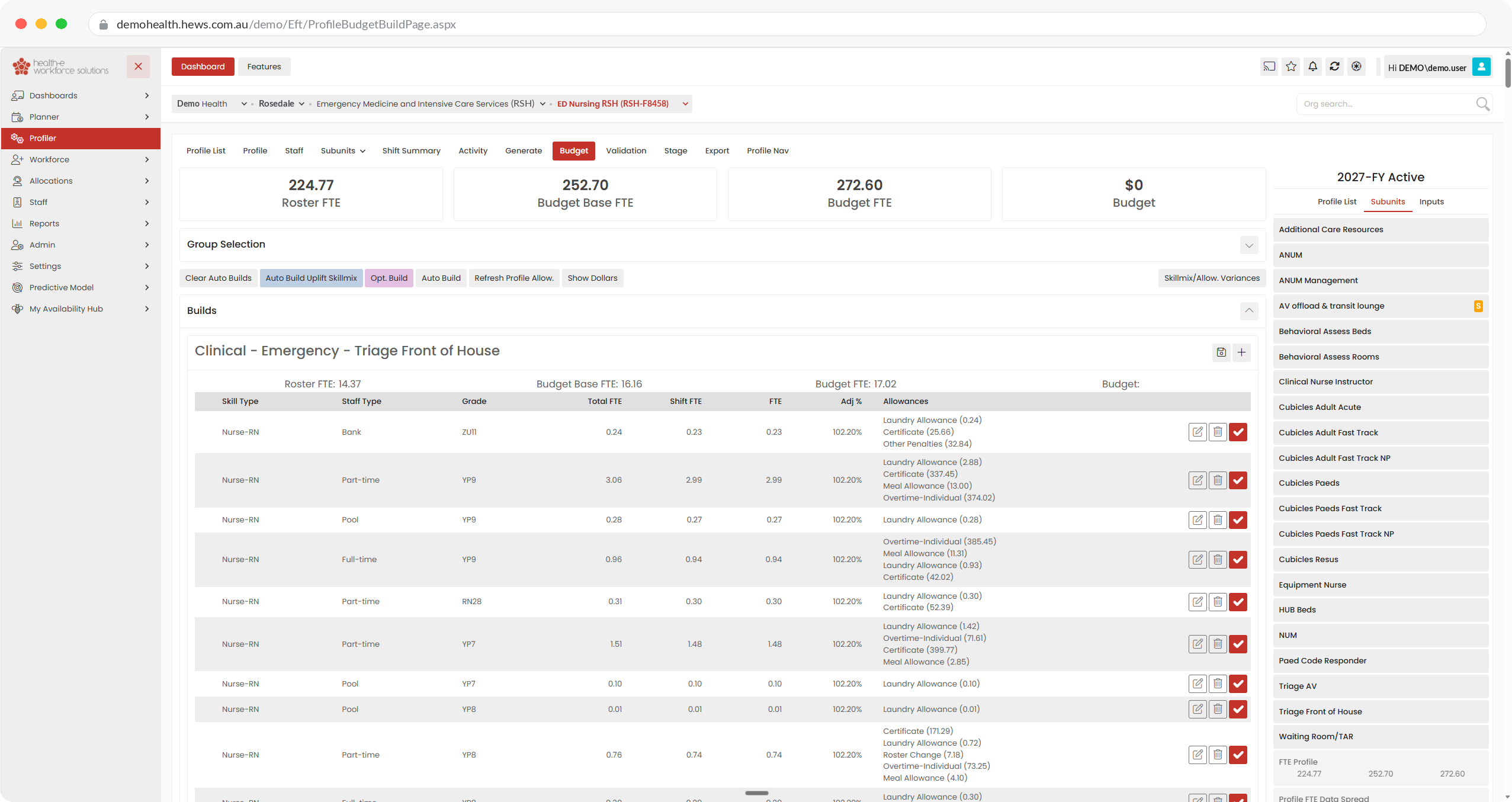
GL-Linked FTE & Dollar Budgeting
Build workforce budgets that connect directly to your general ledger. Integrated FTE and dollar models ensure every budget decision reflects real financial data, not assumptions.
Scenario Modelling & Demand Forecasting
Test multiple workforce scenarios before committing. Model changes in service demand, funding, or staffing mix to understand the financial and operational impact of every option.
Variance Analysis & Cost Drivers
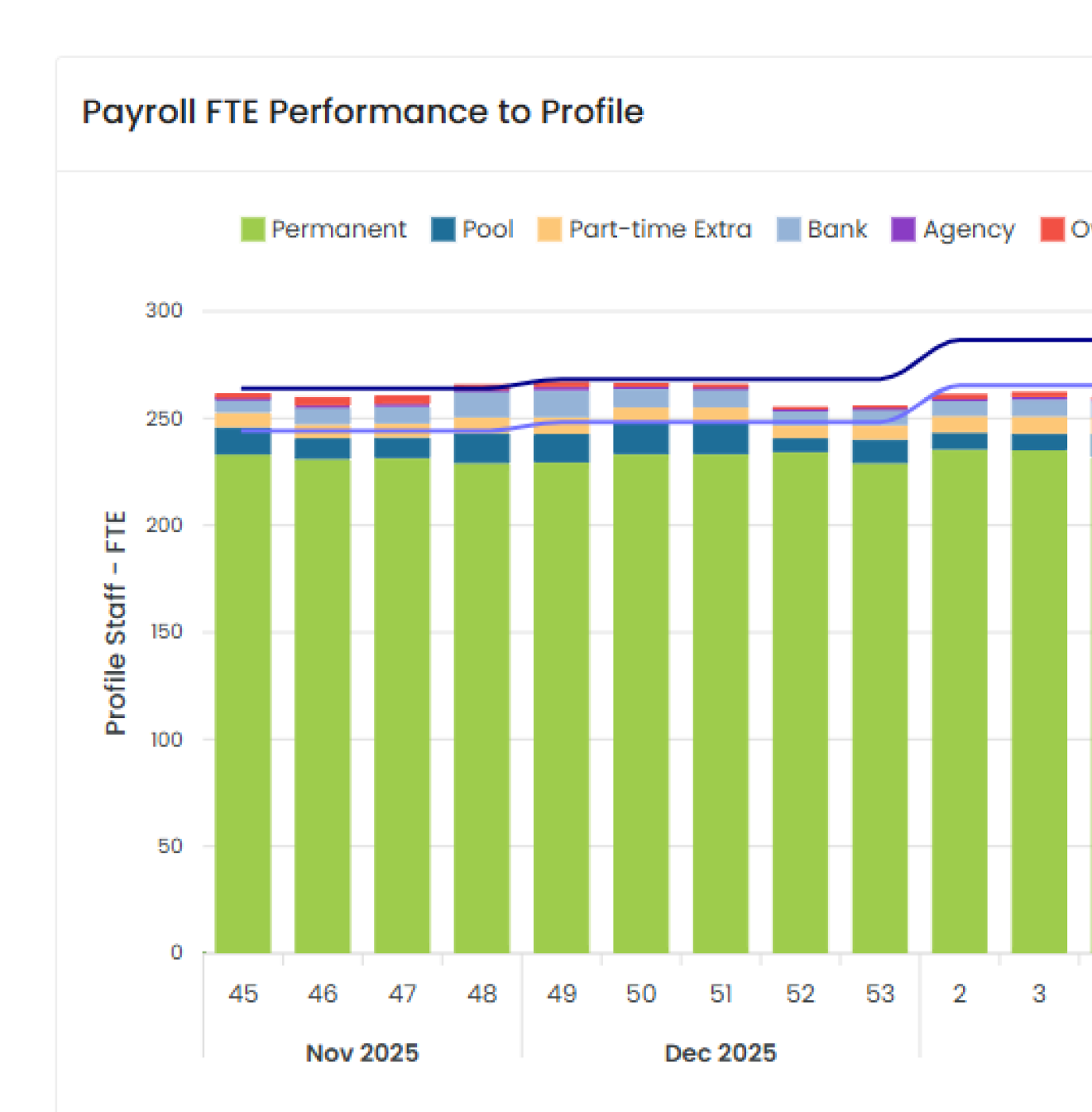
Track actual versus budgeted workforce costs in real time. Identify cost drivers, flag variances early, and give finance teams the clarity they need to course-correct quickly.
Standardised Budget Development
Create consistent, auditable annual operating budgets across departments and services. Standardised profiling eliminates discrepancies and reduces rework during budget cycles.
Built For
Designed for the teams who own workforce budgets.
Finance, planning, and executive teams work from the same governed workforce model — no reconciliation, no competing versions of the numbers.
Finance
Connect FTE planning directly to general ledger data. Track variance, forecast costs, and produce auditable workforce budgets, without relying on manual reconciliation.
Planning
Replace spreadsheet-driven planning with structured, governed models. Build, test, and compare workforce scenarios in minutes, not weeks.
Leadership
Access a clear, system-wide view of workforce cost, efficiency, and risk. Use scenario modelling to evaluate the financial impact of strategic decisions before they're made.
Packages
Scalable plans for workforce budgeting and planning.
Start with GL-linked budgeting and add scenario modelling or standardised budget development as your planning matures.
Budgeting Pro
Features:

Integrated FTE and dollar budgeting
Budget tracking and variance analysis
Central view of approved workforce budgets
The entry point for the Budget & Planning package
Budget Builder Advanced
Features:
Standardised annual operating budget development
Consistent profiling across services and departments
Designed for large, multi-service environments
Builds on Budgeting Pro · optional Advisory & Optimisation
Predictive Planning
Features:
Automated scenario modelling
Service demand and workforce forecasting
Delivered as a fixed-term consultancy engagement
Builds on Budgeting Pro · optional Service Forecasting
How it Works
From raw data to confident budgets.
Replace spreadsheet-driven planning with governed, scenario-driven workforce budgets, connected to your real payroll and GL data.
01
Integrate Data
02
Build Budgets
03
Model Scenarios
04
Track Variance
Modelling connects to your existing payroll, HR, and general ledger systems. Data flows in automatically, no manual uploads or re-entry required.
Create GL-linked FTE and dollar-based budgets using real workforce data, standardised across every department and service.
Test staffing levels, roster changes, and cost assumptions before you commit. Compare scenarios side-by-side to see financial impact instantly.
Monitor actuals against budget in real time. Spot cost drivers early and adjust before small gaps become year-end surprises.
Common Questions
Frequently asked questions
Can Health-e Modelling be used alongside other Health-e modules?
Absolutely. Health-e Modelling is designed to work as part of the broader Intelligence Suite. Budget outputs feed directly into Health-e Insights for reporting and can inform staffing decisions within Health-e Allocations.
Can we model scenarios for specific departments or services?
Yes. Health-e Modelling supports scenario modelling at multiple levels, from network-wide forecasts down to individual department or service-level budgets.
Does Health-e Modelling integrate with our existing finance systems?
Yes. The platform connects directly to general ledger and payroll data. Specific integrations are scoped during the implementation planning phase.
How does Health-e Modelling differ from Excel or Power BI?
Spreadsheets and BI tools require manual data preparation, individual expertise, and don't enforce consistent metric definitions. Health-e Modelling automates data integration from your payroll and GL systems, provides governed budget templates, and lets you run multiple scenarios instantly, without rebuilding from scratch each time.
How long does implementation take?
Implementation timelines depend on your data readiness and scope. Many organisations start with a Health-e Diagnostic engagement to establish their data baseline before moving into Modelling.
What data does Health-e Modelling need to get started?
The platform integrates with your existing payroll, HR, and general ledger systems. During implementation, the Health-e team works with your IT and finance teams to scope the required data connections.