



What was the challenge?
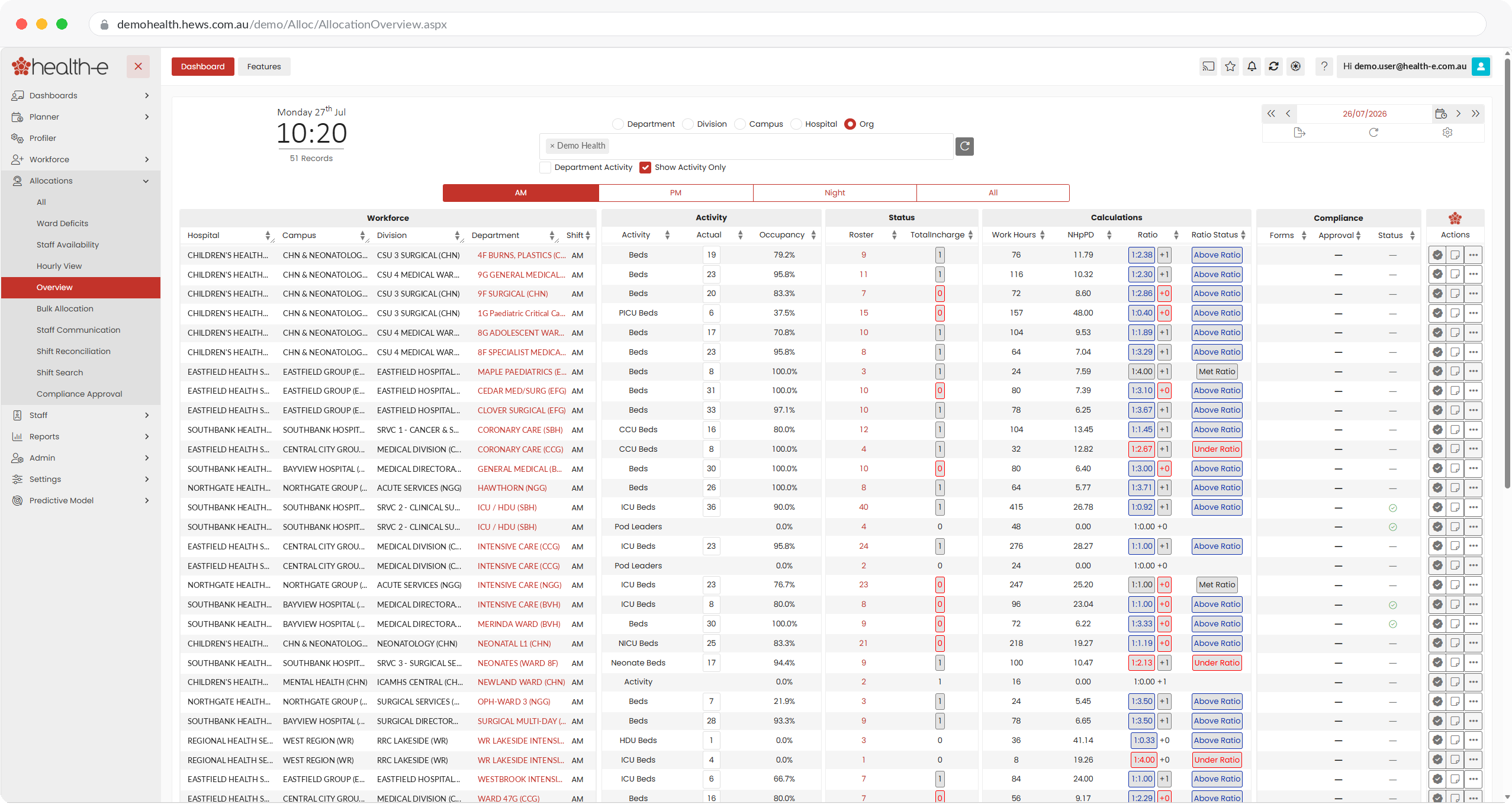
Ward deficits at Taranaki Base Hospital and Hawera Hospital were covered by bank, part-time extra, pool, overtime and redeployment, with little visibility of who was filling what. The busiest unit was running more than 18 FTE of supplementary staff a month. Taranaki wanted to fill those shortfalls from its own people, see every fill in one place, and be able to report its workforce position upward without rebuilding the numbers each time.
For an Australian reader: Taranaki is a regional New Zealand district serving about 123,000 people, and this is the longest-running Health-e allocations deployment anywhere.
What did Health-e do?
In October 2019 Health-e introduced a casual bank app, availability capture and automated SMS shift offers across nursing. In the first month 381 accounts were activated, 504 people logged availability and 537 shifts were booked by SMS.
Payroll is fed into Health-e alongside the allocation data, so every shift filled sits next to what was actually paid. On that combined data Health-e runs nursing and all-staff performance dashboards against budget, with end-of-year reporting and annual dashboard releases. Since the district became part of Health New Zealand in 2022, those dashboards have been used to report Taranaki's workforce position back to the national organisation automatically, rather than being assembled by hand each cycle.
In 2025–26 a refreshed interface added a My Availability Hub, giving casual and bank staff calendar availability, shift acceptance and a mobile view. Monthly nursing, support and combined reviews run in 2026 on the same data.
What were the results?
In 2022 the system filled 30,275 shifts and coordinated an average of 111 FTE of supplementary staff a month across the district. The nursing performance report for the second half of 2022 alone recorded 12,346 confirmed shifts.
In March 2026 the system filled 2,007 shifts, 65 a day on average, peaking at 99 on 31 March, with bank, part-time extra, pool and overtime cover reported by department.
Seven years in, the same data serves three audiences: ward managers and the allocations team filling shifts day to day, nursing and support leads in their monthly reviews, and Health New Zealand, which receives the district's workforce reporting from the same dashboards.
What does this make possible?
A regional district can fill its ward shortfalls from its own casual bank, pool and part-time staff, see every fill against payroll, and report its workforce position upward from the same system, without a separate reporting exercise.
Seven years in, Taranaki is still extending the platform rather than replacing it: the 2026 self-service hub puts availability and acceptance in staff's hands, and the monthly reviews give nursing and support one shared view.